

I lead developer design at Microsoft, and I have a problem: the designers I most want to hire hesitate. They just can't picture themselves at Microsoft. Mention it to a great designer and they imagine handing over their Mac, getting a fat Dell laptop, and spending their days pushing pixels around in PowerPoint.
None of that is true. But nobody believes a recruiter, so I needed a stunt.
The ask
Our team came to Microsoft through the Xamarin acquisition. We design in Figma and Sketch, prototype in code, ship on GitHub, and plenty of us are on Macs. The best way to prove that, I figured, was to show how we worked instead of describing it.
So I wrote the shortest job ad I could, put it in a public repo at microsoft/join-dev-design, served it with GitHub Pages, and made the application process a pull request:
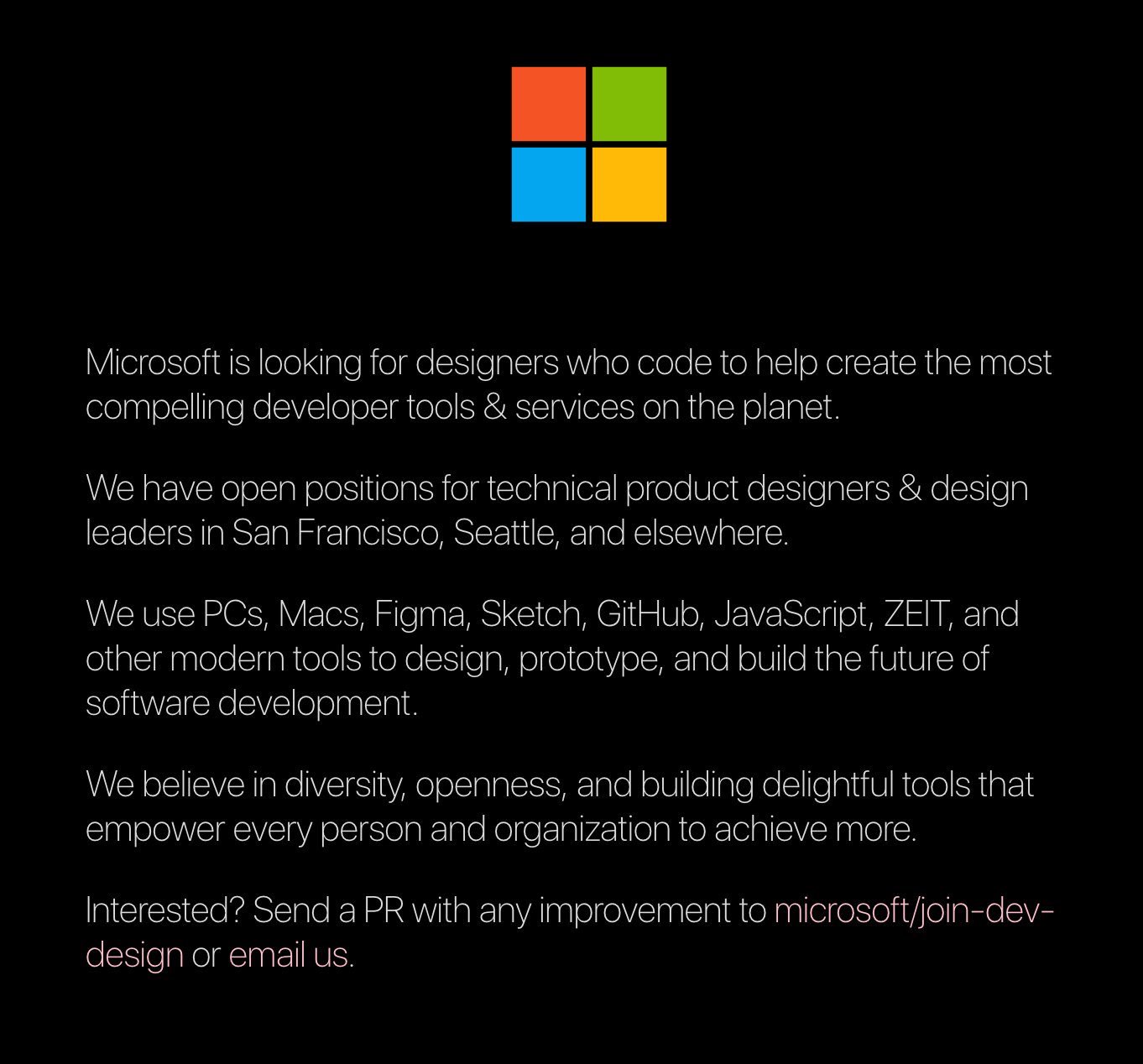
Note the third paragraph, which was carrying most of the weight: We use PCs, Macs, Figma, Sketch, GitHub, JavaScript, ZEIT, and other modern tools. The last line was the real pitch: Interested? Send a PR with any improvement.
At 6:42pm last Wednesday, I tweeted it:
Are you a designer who codes? Do you love using tools like @github, @figmadesign, and @code? Want to design the most compelling developer tools & services on the planet? Send me a PR:
Day one
By the next evening, fifteen pull requests had been merged. People moved the CSS into its own file, fixed accessibility, swapped in a monospaced face, added a load animation, pointed the Figma link at HTTPS, and stopped the scrollbar from flickering. Pierre Reimertz added a note in the devtools console—with the Microsoft logo drawn in CSS—for anyone curious enough to look.
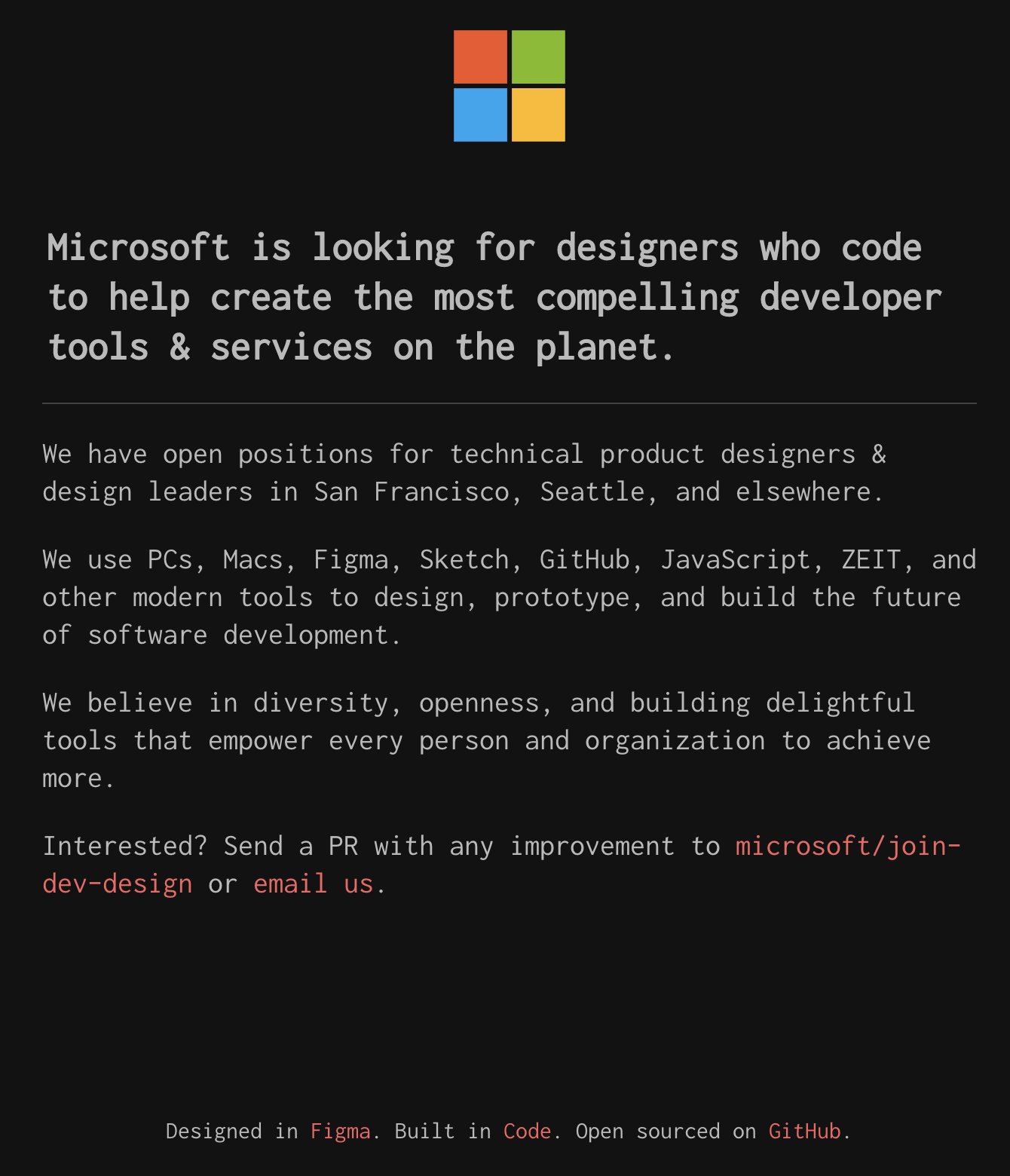
"It's come so far in one day!" I posted. I could barely keep up.
Around the same time, Pierre posted it to Hacker News, and it climbed to the front page: 136 points and 108 comments. Commenters sent each other to his console message. My favorite comment quoted the line about Macs and called it "some incredible self-awareness":
I've encountered more than a few people who casually brush off applying to Microsoft because they prefer developing on unix machines.
Those were exactly the people I was trying to reach.
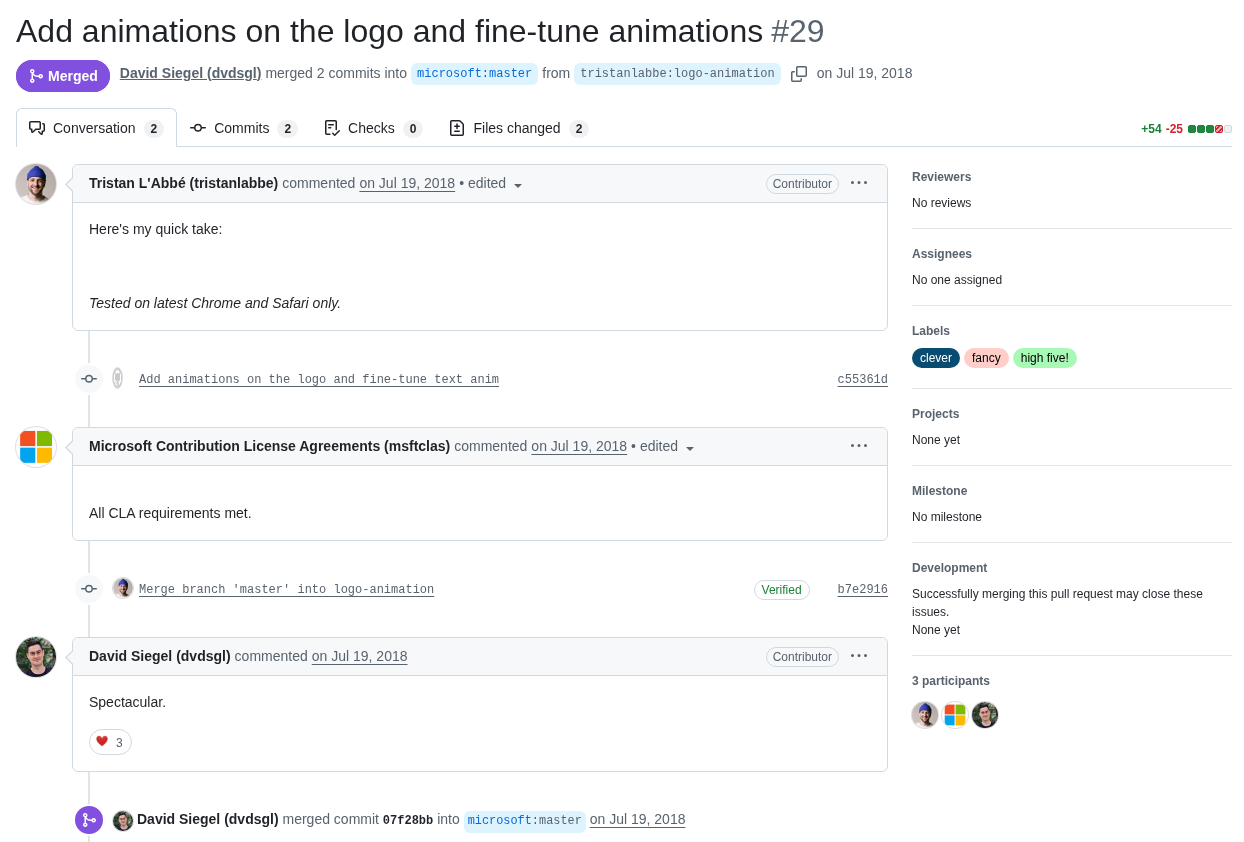
One of those first-day pull requests came from someone named Tristan L'Abbé, who animated the logo tiles and fine-tuned the text animations. The description read, in full, "Here's my quick take." I labeled it clever, fancy, and high five!, wrote "Spectacular," and merged it.
Day two
The next morning, Amanda Silver, who led developer tools at Microsoft, shared the page with her own followers: "Create a PR to apply." It stayed on GitHub's trending list for three days. Someone in the replies called it "the best hiring process I have seen."
My favorite retweet came from Guillermo Rauch, CEO of ZEIT. ZEIT was right there in the ad's list of tools we used, and getting a nod from the person who built it made me absurdly proud.
That same day I walked into an executive meeting with my peers and my boss, Nat Friedman. Everyone had seen it, and they were all wearing the same look: quietly impressed that I'd taken the risk. Nat looked at me and said, "You said we use Macs?" Then everyone traded sidelong glances. Nobody said it out loud, but the whole room was thinking the same thing: David is about to get promoted or fired.
July 20 was the busiest day: 25 merged pull requests, 82 opened in total. Somebody added a light theme. Somebody else embedded a Simon game. The footer started counting its contributors.
Time travel
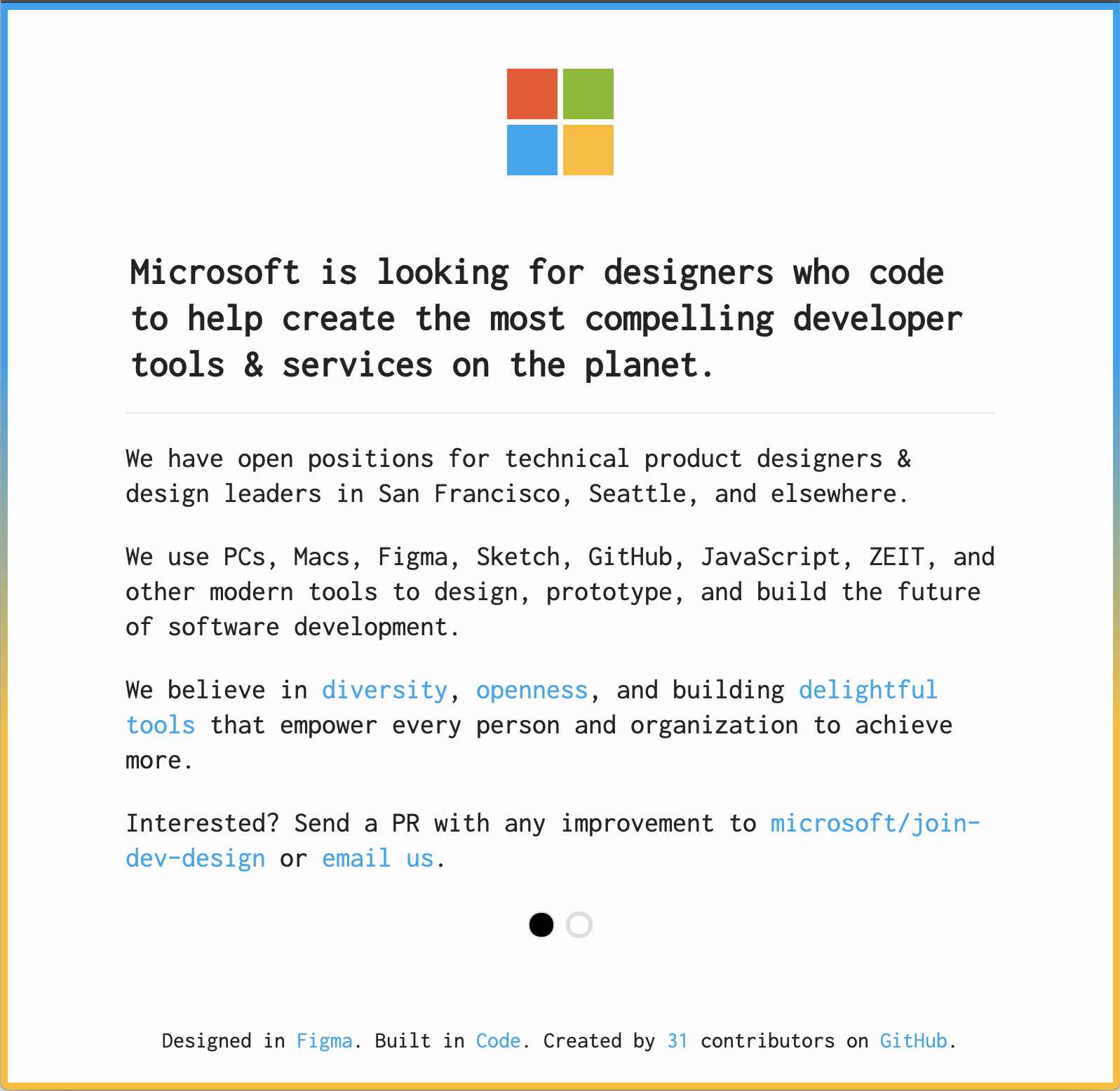
Then came my favorite part. George Cameron opened a pull request called "Added Time Travel Functionality": scroll past the bottom of the page and older versions of it appeared, one after another, going back through the commit history. "It's pretty cool to keep scrolling down," George wrote, "and see how the change has changed over time."
Over the next two days, people who had never met each other turned that idea into a full history browser. Derek Nguyen rebuilt it on GitHub's GraphQL API, so a build script could pull every merged pull request, unpack its version of the site, and index it. Other contributors added keyboard navigation, hover states, and links back to each pull request. You could step through the page's whole life, one merged PR at a time, with the author's name beside each step.
I posted a video of it and wrote:
Four internet strangers just spent two days working together to add time travel to our little job ad, allowing you to step through the 55 PRs we've accepted so far. I'm absolutely floored.
I still am. Nobody asked them to do it. A job ad had turned into an open source project with its own contributors, its own build pipeline, and its own feature roadmap.
Here it is, starting from Adrián Mato's first visual suggestions:
By the numbers
Nine days in, things are finally calming down. Here's where the page stands:
- 131 pull requests from 91 different people
- 67 merged, adding up to 240 commits
- 25 merged on July 20 alone
- A theme switcher, an MS-DOS theme, a Simon game, a console easter egg, a Lighthouse SEO pass, color-blind contrast fixes, keyboard access, and time travel
Meanwhile, the hiring copy has barely changed. Four paragraphs, all still there. Everyone improved the page around the ad without touching the pitch, which might be the best review a piece of copy can get.
Worth the risk
This has been some of the most fun I've had at work. I took a goofy risk with Microsoft's name on it, and instead of getting fired, I got 91 strangers redesigning my job ad for fun—and found some great people to work with.
Update, 2026: Tristan's logo animation, PR #29, merged on day one, wasn't a one-off. Eight years later, I still work with Tristan. The collaboration that started with "Here's my quick take" is still going. (And ZEIT, soon thereafter renamed to Vercel, did all right too.)


