

Gadget Rules
An impromptu lightning talk on Gaget Rules at Noisebridge hackerspace in San Francisco.
An impromptu lightning talk on Gaget Rules at Noisebridge hackerspace in San Francisco.

The Individual Scenario: You have $100 to donate to charity, how do you spend it? Please write where you might donate before reading further:
The Bulk Scenario: Oprah has given you $100 million and asked you to donate it to charity. What a huge responsibility! How do you spend it?

Can we create an intelligence that outclasses human intelligence as much as human intelligence outclasses a worm's? Could we enhance the human brain, through augmentation or selective breeding, to achieve this? Or would creating a machine-based general artificial intelligence that can recursively improve itself be a better approach?
How do we reason about the motivations and behavior of a superintelligence? What unforeseen consequences could spell devastation for humanity if a superintelligence doesn't share our values? Could we conduct a 'controlled detonation', powering on a potential superintelligence in a guarded environment so we can test it safely?
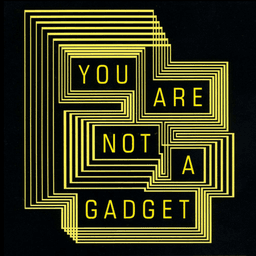
Jaron Lanier is a preeminent technologist and Silicon Valley pioneer. In You Are Not a Gadget, Lanier artfully and even-handedly argues that today's prevailing Internet ethos undervalues the individual, and instead places emphasis on the misguided notion of the "hive mind"—the powerful crowd dynamic that breathes life into sites such as Facebook, Twitter, and Wikipedia.
A chronological list of the papers I wrote as an undergraduate.
In The Extended Mind, Andy Clark and David Chalmers discuss the possibility of extended minds; coupled systems in which a human organism produces cognition, beliefs, and thoughts with the aid of external entities. Clark and Chalmers give the example of Otto, a man suffering from Alzheimer's who uses a notebook to record his thoughts and beliefs. The authors argue that our notion of belief ought to be adjusted so that Otto and his notebook constitute a cognitive system possessing beliefs that are similar in all important ways to normal beliefs. In Why There Still Has to Be a Language of Thought, Jerry Fodor argues that our thoughts have a constitutive, evaluable structure analogous to the structure of language and to the relations among entities in the world. I offer three objections to Clark and Chalmers's concept of the extended mind, ultimately arguing that extended mind semantics allows us to make counterproductive and counterintuitive claims about minds, beliefs, and more. I will show the similarities between Clark and Chalmers's claims about language's role of relating the mind to entities in the world, and Fodor's ideas of mental representations and computationalism. Although I find important differences between Clark, Chalmers, and Fodor, I will offer a plausible account of extended minds that is friendly to the representational and evaluational aspects of Fodor's computationalism. I ultimately conclude that although extended mind semantics is sometimes useful, the line between the mind and the rest of the world should remain in the skull for the time being.
In an article entitled Computing Machinery and Intelligence, Alan Turing describes the Turing test, his famous criterion for machine intelligence: a computer can be considered a thinking machine if a human interlocutor, after asking the computer a series of questions, cannot tell whether he is conversing with a machine or with another human. After describing the details of this test, Turing discusses a handful of arguments that deny the possibility of thinking machines. Turing gives special treatment to "Lady Lovelace's Objection" (450), an argument formed around a declaration that computers cannot be creative. I will explain Lovelace's objection, offer an interpretation of what Lovelace means by "creativity," and argue that computers are not creative in this sense. For another perspective on the possibility of creative machines, I will frame Tom Mueller's article, How computer chess programs are changing the game, as an argument for why some computers ought to be considered creative. I will go on to argue that notwithstanding Lovelace's objection, Mueller's examples amount to "Turing tests" for creativity in which the chess programs pass. Finally, I will argue that these "Turing tests" for creativity are crucially different from Turing tests simpliciter, and therefore we cannot conclude from Mueller's article that chess-playing programs think.
In The World as Will and Representation, Arthur Schopenhauer offers an encyclopedic vision of a dichotomized world; half of the world is mere appearance or representation, while the other half consists of things-in-themselves, inner natures, Will. Schopenhauer borrows the language and concepts from his general system of metaphysical duality, most notably the concept of the Platonic Idea, and applies them in an account of aesthetic experience. In The Sense of Beauty, George Santayana takes a decidedly non-metaphysical approach to explaining aesthetic experience, as Santayana thinks that philosophers of art before him "have generally been audacious metaphysicians...[who] have represented general and obscure principles, suggested by other parts of their philosophy, as the conditions of artistic excellence and the essence of beauty" (6). Santayana argues that these obscure metaphysical principles are "vague [expressions] of [our] highly complex emotions" (8), which nonetheless excite our aesthetic susceptibility, but fail to tell us what is beautiful and why. I will frame Santayana's critical response to Schopenhauer's metaphysical excesses by first discussing Santayana's general criticism of the metaphysical or "Platonist" approach to aesthetics. After that, I will summarize Schopenhauer's general theory and the role Platonic Ideas play in his account of aesthetic experience. Then, I will consider Santayana's psychological explanations of the origin of Platonic Ideas and their aesthetic function as a response to Schopenhauer's use of the same. Finally, drawing on these discrepancies, I will argue that Santayana's concept of Expression provides a better explanation of the immediate and intrinsic quality of aesthetic value, which Schopenhauer only expresses metaphorically in terms of "pure contemplation, absorption in perception, being lost in the object, forgetting all individuality," etc. (197).
In The Second Treatise of Government, John Locke enumerates circumstances under which a ruler violates the trust of his people. Under those circumstances, it is the responsibility of the people to judge whether their trust has been violated, and, if they judge it has been, it is the people's right to dissolve and reform the government. Unable to convince the British people that the "repeated injuries and usurpations" of King George III merit a drastic upheaval, Thomas Jefferson implies in The Declaration of Independence that it was necessary to circumvent the dissolution of the government of George III by instead dissolving the underlying bonds of political society, bifurcating the British commonwealth into two separate political societies: the people of the United States of America; and the loyalists and people of Britain. In order to make The Declaration of Independence more consistent with The Second Treatise, Jefferson must explain how it could be "necessary for one people to dissolve the political bands which have connected them with another" while Locke holds that "[the] world is too well instructed in, and too forward to allow of, this way of dissolving of governments." Alternatively, Jefferson could argue, as I will, that as of the drafting of The Declaration, political society had already been dissolved by the actions of George III and the British people.
Can we conceive of a being so great that to disbelieve its existence only leads to absurdity? St. Anselm thinks that we understand "something greater than which nothing can be thought," and he argues that our understanding of this being is such that we contradict ourselves upon thinking that such a being does not exist. Anselm arrives at his conclusion only by befuddling object language and metalanguage, blurring the distinction between "a being that exists" (meta) and a being that exists (object). Regardless, we see that if we take care in our interpretation of his argument, Anselm delivers sound reasoning for the possibility of such a being and a reaffirming argument for those who already believe in such a being.
Pursuant of a memory theory of personal identity, Sydney Shoemaker argues that personal identity does not imply, and therefore does not consist in bodily identity. In the canonical example of body transfer, Shoemaker describes a case in which
…by a surgical blunder (of rather staggering proportions!) Brown's brain gets into Robinson's head. When the resulting person, call him 'Brownson', regains consciousness, he claims to be Brown, and exhibits detailed knowledge of Brown's past life, always reporting Brown's deeds and experiences in the first person. It is hard to resist the conclusion that we, viewing the case from the outside, ought to accept Brownson's claim to be Brown, precisely on the basis of the evidence that he remembers Brown's life from the inside. (Shoemaker 78)
Our inclination to make a judgment of personal identity in favor of Brownson's memory claims gives inductive strength to the Lockean memory theory of personal identity; in fact, the Brownson case is a reformulation of one of the examples Locke gives in support of his memory theory, in which a prince and a cobbler exchange souls or consciousnesses and the result is a prince in a cobbler's body and vice versa. Although the Brownson case gives reason to question whether personal identity consists only in bodily identity, it strikes us as compatible with bodily theories of personal identity because Brown and Brownson share a brain. On the other hand, if we conclude that Brownson is Brown, and if by 'body' we mean body without the brain, Shoemaker's example should be considered a case of body transfer ('superficial case') – one person has some body at some time, and the same person has a different body at a different time. This possibility is incompatible with any superficial bodily theory of personal identity, which would by definition hold that sameness of superficial body implies sameness of person.
In Plato's Gorgias, Socrates wants Polus, a young follower of the sophist Gorgias, to bear witness to Socrates' claim that Socrates, Polus, and everyone else would rather suffer injustice than do injustice (Gorgias 474b2-4). Socrates is concerned with this question because if Polus concedes it will support Socrates' overarching argument in the Gorgias that he who does injustice and gets away with it is more miserable than he who does injustice and is justly punished (472e4-7). Socrates succeeds in persuading Polus that everyone would rather suffer injustice than do injustice; however, Socrates does not succeed because his argument is sound, but because he presents an ambiguous and incomplete conception of what it is to be 'more shameful' in his argument, and he usurps the incompleteness of his argument to trivialize the decision between doing injustice and suffering injustice that Socrates ultimately calls upon Polus to make. I am unconvinced by Socrates' argument because I see that Polus is deceived by Socrates near the end of the argument when Socrates asks him to choose "what's more evil and…more shameful over what is less so" (475d6-7).
Epicurus holds that the goal of life is pleasure (DL 10.131), by which he means a condition free from pain, including fear. Attempting to lead us to this quiescent state, Epicurus wants to show that death is neither a source of pain nor fear, imploring us to "get used to believing that death is nothing to us" (DL 10.124). Epicurus concludes that death is nothing to us by arguing that death is not painful (DL 10.124), that that which is not painful when present is not to be feared (DL 10.125), and, furthermore, that our mortality is no cause for anxiety (DL 10.139). Showing that death is nothing to us is one component of Epicurus' Tetrapharmakon, a four-part doctrine wherein Epicurus removes many obstacles to static pleasure. Epicurus gives a sound argument for the conclusion that death is not painful; however, his conclusion that our mortality should not be a cause for anxiety is very difficult to accept. Perhaps the inexorable limit imposed on life by death cannot impose a similar limit on static pleasure, but even Epicurus agrees that there are other kinds of pleasure to be had in a good life.
In order to conclude a project whose purpose is to understand a work of art by evaluating it from diverse theoretical perspectives, these ways of seeing must be conclusively aggregated towards a best evaluation. I began my project of understanding Brass Standing Figure of a 1000-Armed Avalokitesvara with 11 Heads (Avalokitesvara) by documenting my immediate impression of the statue; what I saw and how I reacted; and by detailing my intellectual response to the work upon reflection; what information was missing from my understanding of the work, and what questions I would need to ask in order to get this information. To answer these questions, I began by evaluating the Avalokitesvara using an intentionalist theory of art, scrutinizing the psychological states and processes of the artist for explanations of the work. Responding to the shortcomings of the intentionalist evaluation, I evaluated the Avalokitesvara using a non-intentionalist theory of art, examining the iconography found in the work by referencing the ideologies of 18th century Tibet and Mahayana Buddhism. Surprisingly, both of these theories leave the most important questions about the work unanswered: what is of aesthetic or artistic value in the work, how do we as receivers of the work appreciate that value, and is the art good? I feel that intentionalist and non-intentionalist theories alike promote a misguided attempt to appreciate art by understanding it. To the contrary, I conclude that we can best appreciate the Avalokitesvara not by understanding it, but by experiencing it; experiencing the Avalokitesvara consists in a reasonable emotional exchange with the artist whereby the work is allowed to "lend its meaning to [our] meaning" (Berger 20). After experiencing the Avalokitesvara, I conclude that it is good insofar as it successfully communicates emotion, which is the proper activity of art (Tolstoy 171).
In Women, Art, and Power, Linda Nochlin investigates the power status of women as depicted in a group of paintings created between the late 18th and 20th centuries. Nochlin's exposé of the relations between women, art, and power represented in these images plays a role in a greater project, of which Nochlin is a pioneer: a non-intentionalist, critical theory of art, which examines the iconography found in the art of a particular culture by referencing the culture's ideology. This excavation and interpretation of a work's iconography in terms of the ideology of the culture surrounding the work's creation is a non-intentionalist endeavor because, according to Nochlin, the very nature of an ideology stipulates that the beliefs it comprises be "assumed to be self-evident… [and, when represented in art,] relatively invisible to most contemporary viewers, as well as to the creators of the paintings" (Nochlin 72). Clearly, appealing to an artist's conscious intentions in creating a work of art can tell us nothing about the work on the level of ideology when this level of understanding is completely inaccessible to the artist. Employing Nochlin's non-intentionalist method to form an understanding of Brass Standing Figure of a 1000-Armed Avalokitesvara with 11 Heads (Avalokitesvara), I will examine the extent to which both the artist and the iconography of the work were directed and determined by the ideologies 18th century Tibet, and of Mahayana Buddhism.
In Book II of Physics, a treatise on natural philosophy, Aristotle presents a teleological conception of nature, a view holding that purposive ends exist in nature and account for natural substances and their processes. Substances, according to Aristotle, are natural insofar as they possess a nature, an internal "principle and cause of motion and stability," (192B22) belonging primarily to that which is said to posses the nature and to be made natural by it (192B23). Aristotle outlines four explanations for being, which include material, formal, efficient and teleological justifications for things, and shows that nature comprises all four of these explanations. The teleological account of being, or the "for the sake of" cause, is controversial when said of nature because it challenges many pre-Aristotelian accounts of being, most notably that of Empedocles, who believes there are no goals in nature, but rather coincidental ecological successes determined by chance permutations of elements. Aristotle wants to show that there are higher organizational principles or "forms," which he identifies as "natures" in natural things. He shows that nature is a "for the sake of" cause by arguing that natural things are not caused coincidentally but are for something, and that being for something, natural things and their sequences are directed towards their ends; towards what they are for; towards their form; and towards their nature.
Before attempting to evaluate Brass Standing Figure of a 1000-Armed Avalokitesvara with 11 Heads (Avalokitesvara), a critical theory suitable to the task at hand must be found to ensure a proper interpretation of the work. It is also necessary to understand the work before evaluating it so that in the evaluation the work's truths are neither neglected, nor exploited, nor distorted by the critic. An intentionalist theory of art, in which the artist's psychological states and processes involved in making the work are taken to be relevant to interpreting and understanding it, requires that the critic employ a base understanding of the history of the work in any evaluation, stipulating a suitable context in which we can understand and evaluate the Avalokitesvara. Such a theory can be found in Richard Wollheim's Criticism as Retrieval, in which Wollheim outlines his theory of retrieval, a strong intentionalist model: "criticism is retrieval. The task of criticism is the reconstruction of the creative process… The creative process reconstructed, or retrieval complete, the work is then open to understanding" (Wollheim 235). Created in 18th century Tibet (Quick 175), the Avalokitesvara can be criticized as a work of art intended to demonstrate the cultural and religious significance of the Buddhist deity Avalokitesvara, the figure depicted by the statue. By performing retrieval on the creative process, in which the finished Avalokitesvara plays only a small role, we can approach an understanding of a work of art whose origins are so different from our own that by any non-intentionalist critical theory, the work would be entirely misrepresented, and the evaluation would necessarily fail to incorporate the cultural and religious significance of Avalokitesvara.
In Section VII of An Enquiry Concerning Human Understanding, 18th century philosopher David Hume continues his revolutionary natural philosophy of the mind by examining the limits of human understanding with respect to ideas of causation:
When we look about us towards external objects, and consider the operations of causes, we are never able, in a single instance, to discover any power or necessary connexion; any quality, which binds the effect to the cause, and renders the one an infallible consequence of the other. (EHU 7.6)
Departing radically from the rationalist epistemology of his predecessors, Hume argues that underlying notions of causation as it would exist in nature, such as force, energy, and power, are beyond the reach of human understanding if not completely meaningless. Hume shows that our ideas of causation are inadequate by examining and then discrediting the notions of causation with which we are most familiar: the power we ascribe the will over movements of the body, and the power we believe the mind has to effect ideas within itself. Although Hume argues that human understanding excludes the underlying notions of causation as it would exist in nature, he accounts for our notion of cause and effect using the concept of impressions of constant conjunction taught by experience, thus revealing an intuitive conception of causation compatible with his naturalist account of the human mind.
Archimedes used to demand just one firm and immovable point in order to shift the entire earth; so I too can hope for great things if I manage to find just one thing, however slight, this is certain and unshakeable. (Med, 16)
At this point in the Second Meditation of Descartes' Meditations on First Philosophy, the meditator finds herself in "a deep whirlpool," (Med, 16) where perhaps the only thing that is certain is that there is no certainty. Having trained herself to consider anything that could admit the slightest doubt as utterly false, the mediator searches for her Archimedean point, an undeniably certain datum that, once found, will act as the balance upon which the certainty of all subsequent knowledge can be measured. Offered informally as the famous cogito reasoning in the Second Mediation, this logical argument is used by Descartes to posit the meditator's knowledge of the existence of "I," or self as a thinking substance, as the unshakeable datum:
Although this argument is valid, it is not sound in the context of the method of doubt; the first premise presupposes concepts of thought and substance, the veracity of the second premise relies similarly on the preconceived notion of thought, and the second premise depends on, at the very least, the thinnest interpretation of "I" to be found in the conclusion, while also implying the preconceived notion of consciousness.
In a retort against Pascal's pragmatic Wager Argument for the justification of faith-based beliefs, William Kingdon (W.K.) Clifford introduces in The Ethics of Belief a moral code that holds that it is wrong for anyone to believe anything on insufficient evidence, that all genuine beliefs must only be formed on reasonable grounds. Responding to Clifford's attack on pragmatic justifications for faith-based beliefs, William James, a U.S. philosopher and psychologist, writes in The Will to Believe that the evidence for many important propositions is often unclear, and, when presented with a "genuine option," that we ought to assent to or dissent from a particular hypothesis on passional grounds, disregarding the lack of intellectual support for the decision we make. Although I neither completely agree with one argument nor completely disagree with the other, I feel that there is sufficient evidence for the overarching correctness of Clifford's ethics of belief argument, and I find an even greater deal of evidence for the toxic implications of James's passional-belief argument on the following grounds: I agree with Clifford's argument that our beliefs form a sacred commonwealth that belongs to society, not to the individual, and that this endows the individual with certain obligations concerning his beliefs; also, Clifford clearly demonstrates that forming beliefs on passional grounds leads to credulity, blindness to truth, and a decline of inquiry accompanied by faith-in-faith phenomena, three of the most malignant symptoms an individual or a society can exhibit.
Jorge Luis Borges's Pierre Menard, Author of the Quixote is the story of early-twentieth century novelist Pierre Menard's attempt at "an undertaking which was… from the very beginning futile" (B. 44). Menard takes it upon himself to write Miguel de Cervantes's Don Quixote verbatim, not in the words of the work's original author, but instead in the words of Pierre Menard. Only managing to complete the ninth and thirty-eighth chapters of the first part of the heroic epic, Menard fails in his attempt to write the entire Quixote, in fact "not one worksheet remains to bear witness to his years of effort;" however, a righteous line can be drawn between blatant facsimile and the fruits of Menard's labors. Menard's writings, consisting of the ninth and thirty-eighth chapters of the Quixote, are justified as original art when his work is criticized by means of retrieval, and, as a result, his creative process and intended meaning are found to be distinct from those of Cervantes, differentiating his achievement from his predecessor's.
Considering what you thought about Love, it’s no surprise that you were led into thinking of Love as you did. On the basis of what you say, I conclude that you thought Love was being loved, rather than being a lover. (204C)